.png)
Charity number: 1216116



HOW WE WORK

_edited.jpg)


.png)
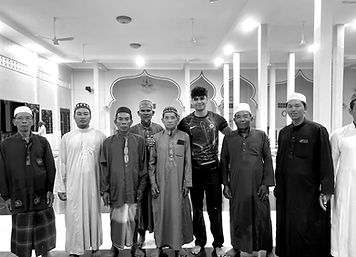
We have identified and visited around 100 families living in poverty, predominately living in the Don Touk villiage in Kampot Most of these families are from the Cham community who were heavily persceuted during the Cambodian Genocide (1975–1979) and have very poor living conditions. We currently cover healthcare costs for around 130 children, 150 women and 100 men, with an average family income of $5 a day.

We cover the cost of inpatient stays, routine outpatient consultations, investigations and management for acute and chronic illnesses. Most families have never been able to afford to see a doctor before. Patients present to the hospital a health access card, alongside there identity card. This allows the hospital to verify the patient is entitled to free treatment financed via the charity.

Families enrolled in the programme are able to access care at Sonja Kill Memorial Hospital, a high-quality NGO healthcare lead by CEO Dr Cornelia Haener. We have secured a Category B discount of 33%, which is covered by the hospital. The remaining 67% of treatment and follow up costs are funded by our charity, ensuring families receive essential medical care without financial burden.

In memory of
.png)
Eliza Brewster grew up in Northumberland and studied medicine at the University of Birmingham.
In April 2025, she completed a medical elective at Sonja Kill Memorial Hospital in Kampot, Cambodia. This was her second visit to Cambodia, and was inspired by her love for south-east Asia and the Cambodian people. During this time, she was also training for a triathlon to raise funds for a hospice in England. Many of her runs took her through rural areas, where she first came across Doun Taok village, where the families she met, particularly the children would give her high fives to help keep her running in the scorching heat. She noticed the families were living with limited access to healthcare, and the experience left a clear impression on her. Before leaving Cambodia, our group began initial conversations with village elders and staff at the hospital about setting up a charity account to support treatment for the community. The idea was simple: create a reliable way for families in Doun Taok to receive basic medical help when they needed it. Unfortunately, Eliza died in a swimming accident in June 2025. In her absence, She was awarded an Aegrotat Bachelor of Medicine and Surgery by the University of Birmingham in 2026. The Syed & Eliza Health Fund was established to pick up where she left off , focusing on healthcare access, practical support, and ensuring the village receives the medical assistance she aimed to put in place.

Born in 1950 in Lahore, Pakistan, Syed Mansoor, spent his childhood in Pakistan before moving to Manchester in the 1960s, where he worked hard to build a new life for his family. Syed became well-known in the community and was a prominent and well respected member. He eventually moved to Birmingham, where he lived until his death. Syed consistently encouraged charity and kindness, believing deeply in supporting those less fortunate. He was known for placing the needs of others before his own, living with humility. Syed died in January 2025 of heart failure, leaving behind a legacy rooted in selflessness and care for humanity. He is survived by his four children and five grandchildren, one of whom now serves as the Chair of Trustees, continuing his work with pride. Through The Syed & Eliza Health Fund, we honour his values by continuing his commitment to charity, ensuring that vulnerable families can access healthcare, dignity, and the support he believed everyone deserves.
